Structural Welding Services: How to Choose the Right Partner for Heavy Equipment Builds
Heavy equipment OEMs depend on strong, consistent weldments to keep products operating safely in demanding environments. Whether you manufacture construction equipment, agricultural machinery, mining systems, or industrial vehicles, the quality of your fabrication partner directly affects product durability, production timelines, and long-term performance. Choosing the right provider for structural welding services is about selecting a manufacturing partner that understands complex assemblies, strict tolerances, production scalability, and quality control.Looking for Experience With Heavy Steel Structure Fabrication
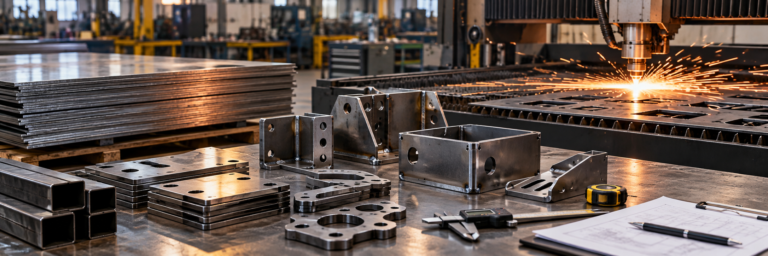
Fabricators with experience in heavy equipment manufacturing understand the challenges associated with thick materials, multi-pass welds, distortion control, and repeatable production. A qualified fabrication partner should have proven experience with heavy steel structure fabrication for industrial applications. This includes welding large frames, support structures, equipment bases, arms, housings, and reinforced assemblies used in heavy-duty machinery. Industrial fabrication often involves processes such as full penetration welding, forming, bending, machining, and precision assembly to meet demanding structural requirements.Evaluating Welding Certifications and Quality Standards
Certified welders, established welding procedures, and inspection protocols help ensure consistency across every production cycle. Many industrial fabricators rely on AWS-certified welders and documented welding procedures to support structural applications and code compliance. Strong quality control processes reduce rework, minimize field failures, and improve long-term equipment reliability. When evaluating industrial welding services, manufacturers should ask:- Are welders certified for structural applications?
- What inspection methods are used?
- How is weld consistency verified?
- Does the company maintain traceability and documentation?
- What quality management systems are in place?
Reviewing Capacity and Scalability
Heavy equipment manufacturers often face changing production volumes driven by market demand, seasonal cycles, or new product launches. Your welding partner should be able to scale production without sacrificing quality or lead times. A fabrication shop that handles both prototype and production-level work provides more flexibility as your manufacturing needs evolve. When evaluating industrial welding service providers, manufacturers should consider factors such as:- Equipment capabilities
- Welding processes available
- Workforce experience
- Material handling capabilities
- Production flexibility
Prioritizing Communication and Engineering Support
Look for suppliers that provide design collaboration, manufacturability feedback, and proactive project management. Experienced fabricators can often identify opportunities to improve weld accessibility, reduce distortion, simplify assembly, or lower production costs before manufacturing begins. Engineering support is particularly valuable for teams developing new equipment platforms or optimizing existing designs, and reliable communication helps keep projects on schedule and reduces the risk of delays or quality concerns. A responsive partner should provide:- Clear production timelines
- Fast quote turnaround
- Consistent project updates
- Problem-solving support
- Technical expertise
Long-Term Reliability For Structural Welding Services
Reliable industrial welding services require stable operations, experienced personnel, consistent quality, and dependable delivery performance. Delayed components or inconsistent weld quality can disrupt entire production lines. A dependable fabrication partner contributes to smoother manufacturing operations and stronger customer satisfaction. Long-term partnerships often create additional value through:- Process improvements
- Better production planning
- Reduced lead times
- Inventory support
- Continuous quality improvements