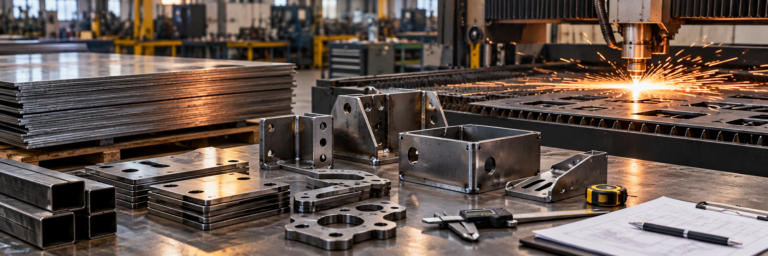
When sourcing cut metal components, OEM engineers and procurement teams frequently need to evaluate laser cutting and plasma cutting. Both processes can efficiently produce brackets, mounting plates, frame components, and other fabricated parts, but their capabilities differ depending on material, thickness, tolerance requirements, part geometry, and production needs.
Choosing a cutting method should start with the requirements of the finished component. The most cost-effective process is the one that can consistently produce the required part while supporting efficient downstream forming, welding, machining, and assembly.
Understanding where laser and plasma cutting fit can help OEMs make better sourcing decisions.
How Do Laser Cutting and Plasma Cutting Work?
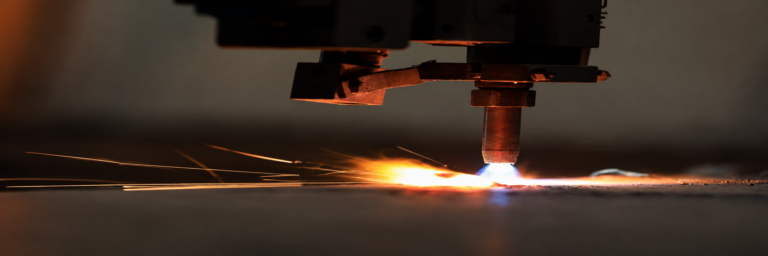
Laser cutting uses a highly focused beam to heat and cut metal along a programmed path. CNC-controlled laser systems can produce complex profiles, holes, slots, and other features with high repeatability.
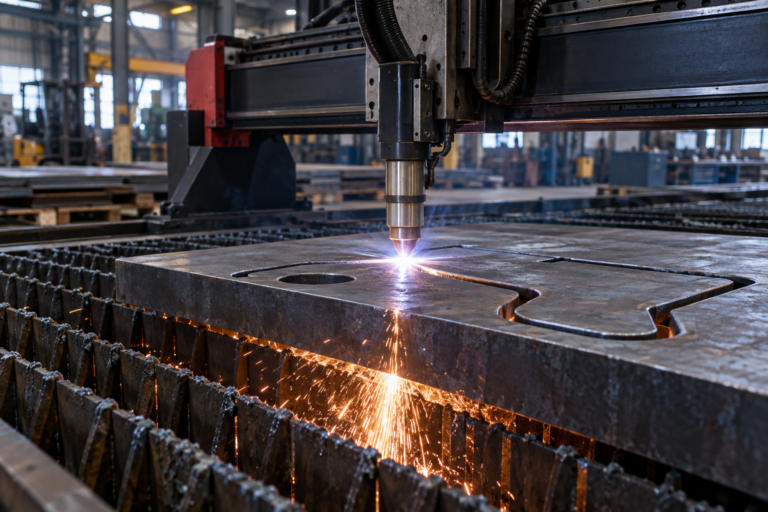
Plasma cutting uses an electrically conductive gas to create a high-temperature plasma arc that melts and removes material. The process is widely used for cutting conductive metals, particularly thicker plate.
Both are established methods for producing components that will undergo additional fabrication. Their differences become important when considering the complete manufacturing process.
Comparing Laser Cutting and Plasma Cutting
Several factors should guide process selection.
Material Thickness
Thickness is one of the first considerations.
Modern laser systems can process a wide range of sheet and plate thicknesses, making laser cutting useful for many brackets, mounting plates, enclosures, and fabricated components.
Plasma cutting is commonly used for thicker materials where speed and efficient plate processing become important considerations. This makes it well suited for structural components, heavy mounting plates, and parts incorporated into large weldments.
Rather than establishing a single laser cutting thickness or plasma cutting thickness limit, engineers should consider thickness alongside material type, geometry, tolerance, and production quantity. Equipment capabilities also vary between fabricators.
Tolerances and Part Geometry
Tolerance requirements can quickly influence the appropriate cutting process.
Laser cutting generally supports tight tolerances and detailed geometries, which can be valuable for components containing small holes, narrow slots, intricate profiles, or features that must align with other parts during assembly.
Consider a formed bracket containing several mounting holes. If those features need precise positioning before the bracket moves directly into bending and assembly, laser cutting may help minimize additional processing.
Plasma cutting can efficiently produce components where the required tolerances align with the capabilities of the process. For a heavy frame plate that will subsequently be welded or machined at critical interfaces, plasma cutting may provide an efficient starting point.
The drawing and functional requirements should determine how much precision is needed at the cutting stage.
Edge Quality and Secondary Operations
Cut quality matters because cutting is often only the first step in manufacturing.
Laser cutting can produce a narrow kerf and clean edges, which may reduce the amount of edge preparation required before forming, welding, or assembly.
Plasma-cut components may require additional cleanup depending on the material, thickness, equipment, and final requirements. If a critical surface or feature will be machined later, however, producing that feature to finished dimensions during cutting may provide little practical benefit.
This is why OEMs should evaluate steel cutting services within the context of the entire fabrication process.
A mounting plate that moves from cutting directly into assembly has different edge and tolerance requirements than a heavy frame component that will undergo welding, machining, and finishing before installation.
Secondary Machining Requirements
Cutting tolerances should also be considered alongside any planned machining.
For some parts, laser cutting can produce features accurately enough to eliminate a secondary machining operation. Eliminating an operation can reduce handling, setup, and production time.
Other components require machining regardless of how they are initially cut. A large fabricated frame, for example, might need precision bores, threaded holes, or machined mating surfaces after welding.
In those situations, plasma cutting the initial plate profile and machining only the critical features may be an efficient manufacturing strategy.
Engineers can help fabricators identify these opportunities by clearly distinguishing critical tolerances from general fabrication tolerances on the drawing.
The Cost of Plasma Cutting and Laser Cutting Cost
A direct comparison of plasma cutting vs. laser cutting cost requires more than comparing cutting rates.
Material thickness, cut length, part complexity, quantity, machine time, material utilization, edge preparation, and secondary operations can all influence the final price.
The lowest-cost cutting operation may not produce the lowest-cost finished component.
For example, one process could have a higher initial cutting cost but eliminate machining or cleanup later. Another could efficiently process heavy plate that already requires downstream machining.
This is why OEMs should consider total production cost, including:
- Material and material utilization
- Cutting and machine time
- Setup
- Deburring and edge preparation
- Forming
- Welding
- Machining
- Finishing
- Inspection
- Handling between operations
For a deeper look at these variables, see Metal Services’ guide to what determines metal fabrication cost.
Match the Cutting Process to the Part
There is no universal answer to the laser cutting vs. plasma cutting question. A thin, detailed bracket and a thick structural frame component have different manufacturing requirements, even when both are made from steel.
Metal Services of Blooming Prairie offers both laser and plasma cutting as part of its broader metal fabrication capabilities. That allows each component to be evaluated based on its material, thickness, geometry, tolerances, and downstream manufacturing requirements rather than forcing every project into a single cutting process.
For OEMs sourcing brackets, mounting plates, frame components, and fabricated assemblies, selecting the appropriate process can improve production efficiency while controlling total component cost. Request a quote to have Metal Services evaluate your drawings and production requirements.