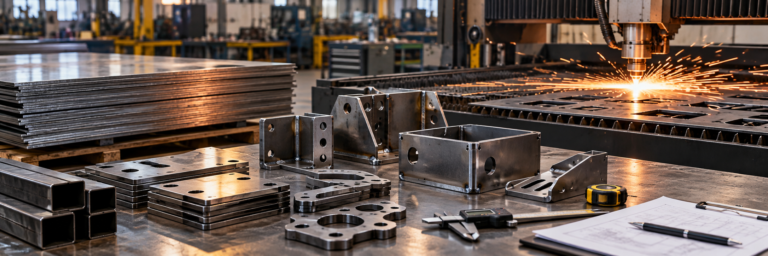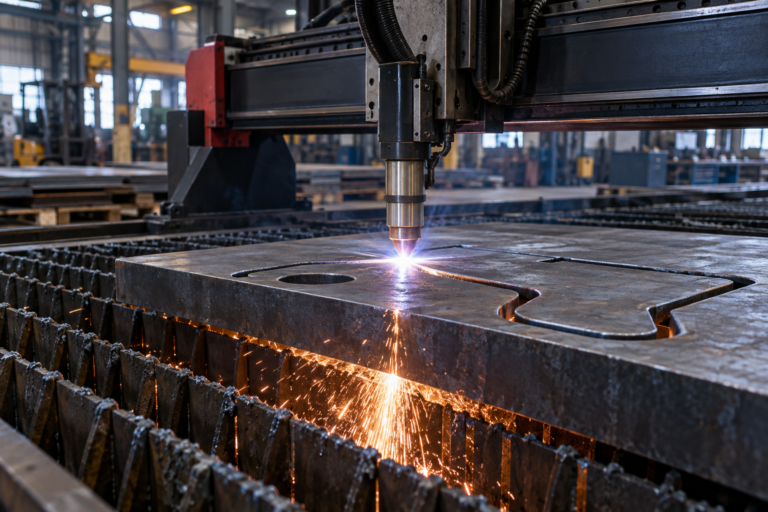
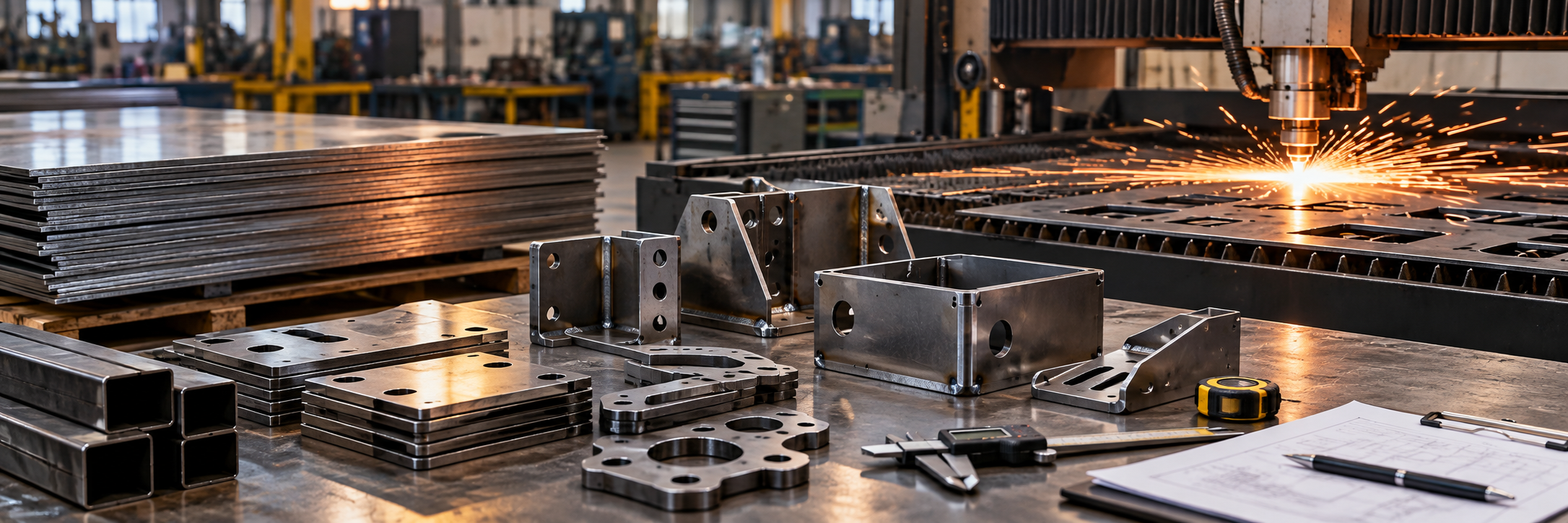
Metal fabrication cost can vary considerably between two parts that appear relatively similar. A simple bracket produced in high quantities may require limited setup and processing, while a large equipment frame with extensive welding, machining, and finishing can involve multiple manufacturing operations.
For OEM engineers, purchasing teams, and sourcing professionals, understanding these cost drivers makes it easier to evaluate quotes and identify opportunities to improve production efficiency. Material, part design, tolerances, production volume, and secondary operations all contribute to the final price.
7 Factors To Consider For Your Best Metal Fabrication Quote
1. Material Type and Thickness
Raw material is one of the most direct contributors to metal fabrication cost.
Carbon steel, stainless steel, and aluminum each have different material costs and processing requirements. Grade, availability, and market conditions can also influence pricing.
Thickness matters as well. A heavy-plate requires different cutting, forming, handling, and welding processes than a light-gauge sheet. A thick structural mount for industrial equipment, for example, will have different production requirements than a formed sheet metal enclosure.
Material utilization also affects cost. Efficient nesting allows a fabricator to produce more components from each sheet or plate, reducing scrap and improving material efficiency.
2. Part Geometry and Complexity
Complexity influences how many operations are required to transform raw material into the finished component.
A flat mounting plate with several holes may require only cutting and deburring. A formed bracket could require cutting, bending, drilling, and additional finishing. A service-vehicle assembly might incorporate multiple cut and formed parts, tubing, weldments, and machined features.
Features such as tight bends, numerous holes, intricate cutouts, and difficult-to-access weld joints can increase production time. Designing parts around efficient manufacturing processes can help control custom metal fabrication cost while maintaining required functionality.
3. Tolerances
Tolerances should reflect the functional requirements of the finished component.
Tighter tolerances may require slower processing, more precise equipment, additional inspection, or secondary machining. When tolerances are tighter than the application requires, those additional production steps can increase costs without improving performance.
This is especially important for frames, mounts, and assemblies in which specific interfaces need precision while other dimensions have more flexibility.
Clearly identifying critical dimensions on the drawing helps the fabricator determine where additional process control is necessary.
4. Production Quantity and Setup
Quantity can have a major effect on per-part metal fabrication pricing.
Before production begins, the fabricator may need to:
- Review drawings and specifications
- Program cutting or machining equipment
- Create nests
- Configure tooling
- Set up forming equipment
- Develop welding fixtures
- Establish inspection procedures
Those setup costs are spread across the production quantity. A one-off prototype or ten-piece run therefore typically has a higher per-part setup cost than a recurring order for hundreds of identical components.
Providing realistic annual or expected production volumes can also help suppliers evaluate tooling, fixtures, and manufacturing methods that could improve efficiency over the life of the program.
5. Welding and Assembly Requirements
Welding can represent a significant portion of the cost of fabricated frames, structures, and assemblies.
Pricing can be influenced by weld length, joint design, material thickness, welding process, accessibility, fixturing, and inspection requirements. Large assemblies may also require substantial handling and positioning during welding.
Design choices can affect these costs. Reducing unnecessary welds, improving joint accessibility, or simplifying an assembly may decrease labor while maintaining required structural performance.
For heavier weldments and structures, Metal Services’ guide to Heavy Steel Structure Fabrication provides additional information about welding, material, complexity, volume, and secondary operations as cost factors.
6. Machining Requirements
Some fabricated parts require CNC machining after cutting, forming, or welding.
Machining may be necessary for:
- Precision mounting holes
- Bores
- Threads
- Mating surfaces
- Critical dimensions
- Features that cannot be produced accurately during primary fabrication
These operations add machine time, programming, setup, and inspection requirements. Designing the part so machining is reserved for genuinely critical features can help manage total fabrication cost.
7. Finishing and Secondary Operations
The finished condition of the component also influences pricing.
Deburring, grinding, powder coating, plating, galvanizing, and other secondary operations require additional processing. Metal Services, for example, lists powder coating, galvanizing, and plating among the secondary operations available for fabricated components.
When evaluating sheet metal fabrication cost, buyers should specify the required finish upfront so quotes reflect the complete, production-ready component rather than only the fabricated part.
Better RFQ Information Leads to Better Quotes
One of the simplest ways OEMs can improve quote accuracy is to provide complete information.
A strong fabrication RFQ should include 2D drawings and available 3D CAD files, material specifications, thicknesses, critical tolerances, welding requirements, finishing specifications, expected order quantities, annual production forecasts, and delivery requirements.
Complete documentation allows a supplier to evaluate the entire manufacturing process instead of making assumptions. Production forecasts can also help the fabricator determine whether dedicated tooling, fixtures, material purchasing strategies, or other process improvements make sense for recurring work.
Look Beyond the Per-Part Metal Fabrication Cost
Metal Services of Blooming Prairie provides integrated metal fabrication services including laser and plasma cutting, press brake forming, welding, CNC machining, tube bending, and secondary operations.
For OEMs sourcing brackets, mounts, frames, service-vehicle assemblies, and other fabricated components, combining these processes with one manufacturing partner can simplify production and quoting.
Have a project ready for review? Request a quote with your drawings, specifications, and anticipated production quantities.